

It is Sunday evening. You slept in, you had a slow morning, maybe you even took the whole weekend off. And yet the tiredness is already creeping back before the week has started. If you feel tired even after rest, you are not lazy and you are not broken. You are running on a kind of tired that rest does not reach.
Tiredness and exhaustion are not the same thing
Tiredness is what a good night of sleep fixes. You push hard for a few days, you rest, and you bounce back. Exhaustion is different. It is the heavy, low hum that follows you into the weekend and is still there on Monday. You can sleep ten hours and still wake up feeling like you never switched off.
The reason is simple. Tiredness lives in the body. Exhaustion lives in the patterns underneath: how you think, how you respond to pressure, and how rarely your mind actually stops. The World Health Organization now classifies burnout as an occupational phenomenon, not a personal failing, and the quiet exhaustion that comes before it deserves the same understanding.
Why rest alone does not fix it
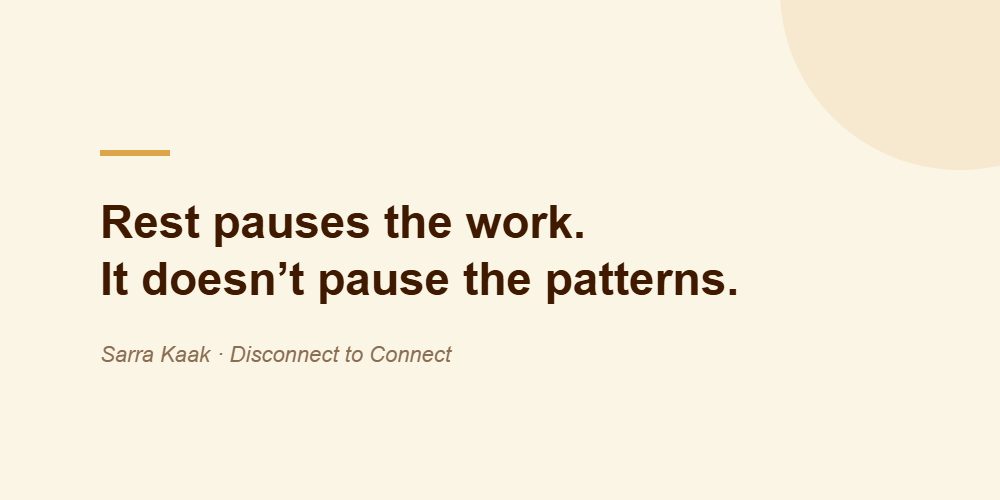
A weekend off pauses the work. It does not pause the patterns. If you spend your rest replaying conversations, planning Monday, and quietly blaming yourself for not doing more, your nervous system never gets the message that it is safe to slow down. You come back from the break carrying the same mental load you left with.
This is why holidays wear off so fast. The rest was real, but the patterns were waiting for you when you got home.
The signals most people miss
Exhaustion rarely announces itself. It does not usually look like collapse. It looks like small, quiet signals that are easy to explain away: the short fuse, the foggy focus, the sense that nothing feels like enough no matter how much you do. Most people notice them one at a time and put each one down to a bad week.
Seen together, though, they tell a clearer story. Learning to read them early is the difference between adjusting now and burning out later.
Signs your tiredness is really exhaustion
- You wake up tired after a full night of sleep.
- The weekend helps, but the energy is gone by Monday afternoon.
- Small decisions, like what to eat or which email to answer first, feel heavy.
- You feel more detached or cynical about work you used to enjoy.
- You need coffee or sugar to get through the afternoon.
- Your body is resting, but your mind keeps running, especially at night.
If you are still performing well despite all this, read our guide to high-functioning burnout signs. It is the version of exhaustion that is easiest to miss.
What actually helps
Real recovery is less about doing more restful things and more about changing what drains you in the first place. A few shifts that make a genuine difference:
- Name the load, do not just carry it. Write down what is actually on your mind. Half of the weight is the effort of holding it all in your head at once.
- Trade self-blame for self-understanding. The voice that says you should be coping better is not motivating you, it is draining you. Notice it, and question it.
- Protect one real pause a day. Not a scroll, not a task disguised as a break. Five quiet minutes where nothing is required of you does more than an hour of distracted rest.
- Look at the pattern, not just the day. One hard day is normal. A month of hard days is a signal worth listening to.
A place to start
If you recognised yourself in any of this, the next step is not another productivity hack. It is learning to read your own signals before they turn into full burnout.
If you want support putting this into practice, my one to one coaching and free resources are here when you are ready.
Ready to read your own signals?
My free masterclass, The 5 Silent Signals of Exhaustion, walks you through the five signals to watch for and helps you score yourself on each one, in about an hour.
Frequently asked questions
Why am I always tired even after rest?
Often because rest pauses the work but not the patterns behind it: a constant mental load, pressure on yourself, and a mind that never switches off. Ongoing tiredness can also have physical causes, so it is worth checking with a doctor too.
What is the difference between tiredness and exhaustion?
Tiredness goes away with sleep and a lighter week. Exhaustion stays after rest, affects your focus and mood, and builds over weeks or months.
Is exhaustion the same as burnout?
Not always. Exhaustion is one of the three dimensions of burnout described by the World Health Organization, alongside mental distance from work and feeling less effective. Long-lasting exhaustion is often an early warning sign.
How long does it take to recover from exhaustion?
It depends on how long it has been building and what is driving it. Small changes can bring relief within weeks, while deeper recovery takes longer. Changing the patterns matters more than the length of your break.
You do not have to keep pushing through a tiredness that rest cannot fix. You just have to learn to listen to what it is telling you.
